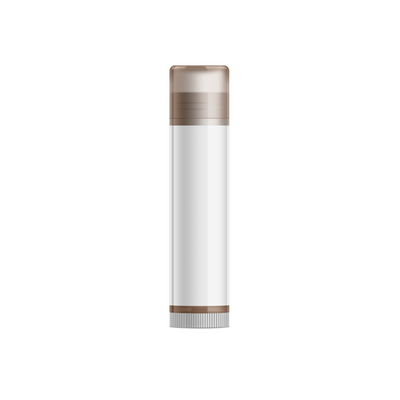
In short:
- homemade lip balm is equal parts beeswax, shea butter and coconut oil by weight, melted together, poured into tubes and left to set;
- a 3 oz batch fills about 18 to 20 standard 0.15 oz tubes in under an hour;
- a printed 2 x 2.15 in. lip balm label with a seal tab is what turns a row of plain tubes into a gift.
Below: the recipe, how to fill the tubes, how to label them and how to package them for the holidays.
Lip balm is one of the easiest homemade gifts there is: three ingredients, one pot, and a whole batch of stocking stuffers in under an hour. It costs little to make, everyone uses it, and a tray of twenty tubes covers teachers, neighbors, coworkers and the party favor table at once. Here's how to make lip balm at home, fill the tubes cleanly, and label them so they look like they came from a shop.
What you need
- 1 oz beeswax (pellets melt fastest)
- 1 oz shea butter or cocoa butter
- 1 oz coconut oil or sweet almond oil
- Optional: a few drops of essential oil or lip-safe flavor oil
- About 20 empty 0.15 oz lip balm tubes with caps (a filling tray helps)
- A kitchen scale, a heatproof glass measuring cup and a small pan of water
- Lip balm labels and a home printer
Weigh rather than measure by spoon: wax pellets pack differently every time, and weight keeps every batch the same firmness.
The basic lip balm recipe
| Ingredient | Amount (by weight) | What it does |
|---|---|---|
| Beeswax | 1 oz | Makes the balm firm enough to stand in a tube |
| Shea or cocoa butter | 1 oz | Smooth, creamy glide |
| Coconut or sweet almond oil | 1 oz | Softens the balm so it spreads |
| Essential or flavor oil | About 10 drops | Scent and flavor (optional) |
Adjusting it: for a firmer balm that travels well in a warm pocket, add a little more beeswax; for a softer one, a little more oil. For a vegan balm, swap the beeswax for candelilla wax and use roughly half as much, since it's harder.
About flavor oils: peppermint, vanilla and sweet orange are favorites. Keep the amount low on lips, and skip cold-pressed citrus oils such as bergamot or lime, which can make skin more sensitive to the sun.
How to make lip balm, step by step
- Set up the tubes first. Stand them upright in a filling tray or packed tightly in a small box, caps off. The balm starts to set within a minute or two of leaving the heat.
- Melt the wax, butter and oil. Put them in the glass measuring cup, set it in a pan of barely simmering water and stir until everything is clear and liquid.
- Add the flavor. Take the cup off the heat, stir in the essential or flavor oil and work quickly.
- Fill the tubes. Pour from the cup's spout or use a dropper, filling each tube just to the top. If a small dip forms as it cools, top it off with the last of the melted balm.
- Let them set. Leave the tubes at room temperature for 20 to 30 minutes, then cap them.
How to label homemade lip balm
The label is what makes homemade lip balm look like a gift instead of a craft project. A standard 0.15 oz tube takes a 2 x 2.15 in. label: the 2 in. width wraps the tube with the ends meeting at the back, and a short tab above the perforation folds over the cap as a seal. (For the full measurements, see our guide to lip balm label size.)
Our go-to is the Lip Balm Tube Labels with Security Seal, 12 to a sheet, from free template #8387 for Canva, Word, Pages and PDF. Waterproof white vinyl holds full color and resists the oils in the balm; brown kraft gives a natural, handmade look that suits beeswax and herbal balms.
- Design the label. Open template #8387. Put the name and flavor in the middle third, which faces forward, and run the details around the sides. Or start from a free design: Botanical, Beige Floral or Beige and Green.
- Print a test on plain paper and hold it over a label sheet against a window to check the lines match.
- Print on the labels. Vinyl is inkjet only; give it 10 to 15 minutes to dry before you peel.
- Wipe the tubes. A little rubbing alcohol on a paper towel takes off the film of oil left from filling, so the label holds at the seam.
- Wrap and seal. Start at the back so the seam is hidden, roll the tube along the table to keep the label straight, then fold the tab up over the cap and press it down.
How many labels do you need?
One 3 oz batch fills about 20 tubes, and a sheet holds 12 labels, so plan on 2 sheets per batch. A 5-sheet pack (60 labels) covers about three batches. If you're making several flavors or selling at a holiday market, the 3-pack (180 labels, $29.95) and 6-pack (360 labels, $49.95) bring the price down from $2.55 a sheet to $2.00 and $1.67, in white vinyl or brown kraft.
Packaging homemade lip balm as a gift
- A flavor trio: three tubes in three flavors, one label design in three colors, tied with twine or tucked in a small kraft box.
- Stocking stuffers: one tube per stocking, with the person's name on the label.
- Teacher and coworker gifts: a tube clipped to a card that says "Thanks for a great year" or "Merry Christmas".
- Party favors: a label with the event name and date, the seal tab in the party color, in a bowl by the door.
- A gift basket add-on: a tube or two tucked into a basket with homemade vanilla, cookies or candles.
Selling your lip balm?
If you sell at a holiday market or online, lip balm counts as a cosmetic in the US, and the label needs the product name, net weight ("Net Wt 0.15 oz (4.25 g)"), the ingredient list and your business name and location. That's a lot for a small tube, which is why the full wrap matters: the back of the label carries the details. See what to put on a product label. This is general guidance, not legal advice.
The recommendation, once more: make a 3 oz batch of equal parts beeswax, shea butter and coconut oil, fill about 20 tubes, and finish them with the 2 x 2.15 in. lip balm labels with security seal. Browse all lip balm labels.